Field Manual
Observability Field Manual
Operational truth systems.
Preview
Full description
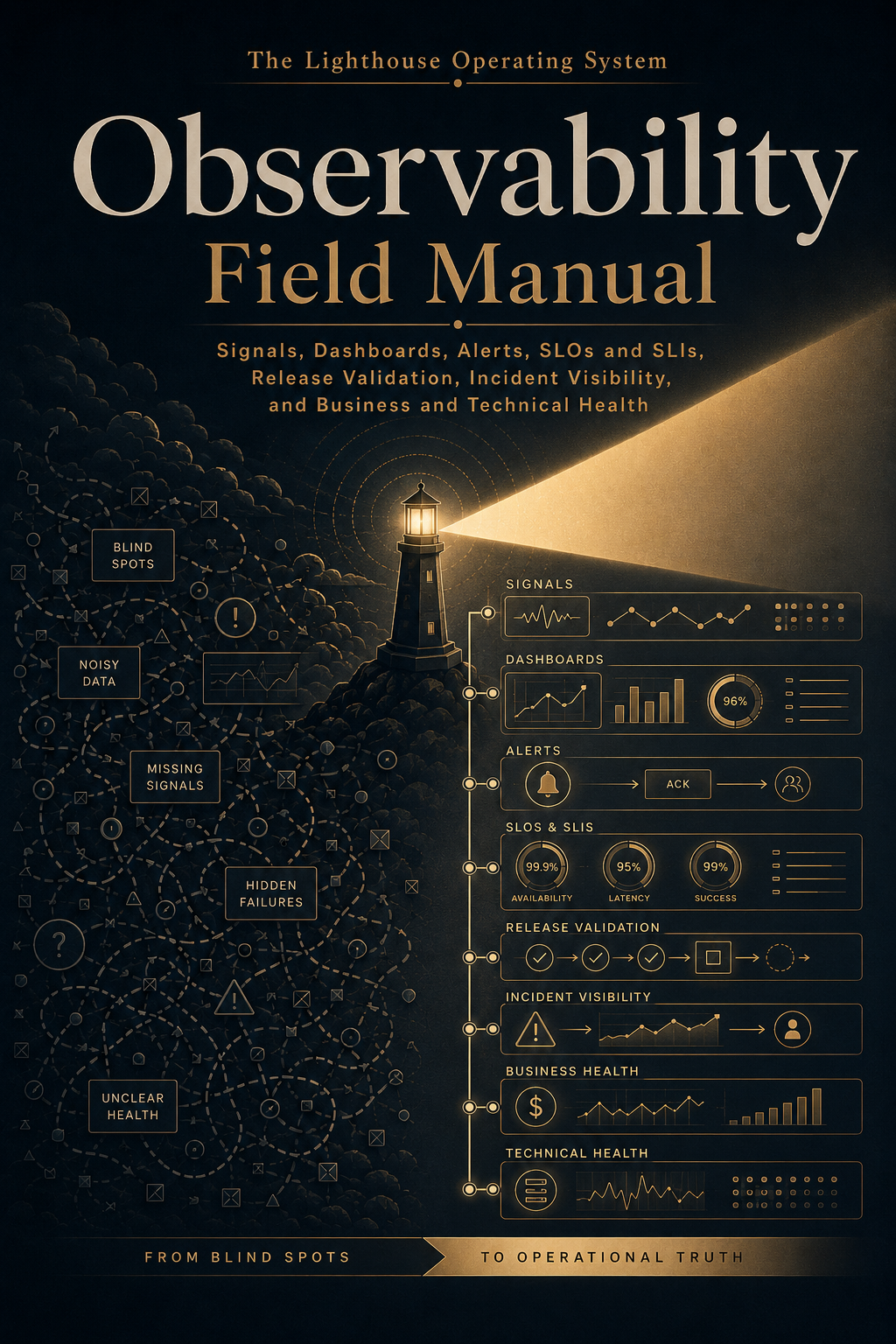
Operational truth systems: signals, dashboards, alerts, SLOs/SLIs, release validation, incident visibility, workflow visibility, and observability as organizational honesty.
Why this title exists
In the Lighthouse Operating System, observability is the truth mechanism. This manual expands observability beyond logs, metrics, and traces into software, workflow, customer experience, and decision-making before hidden drift becomes operational pain.
Included in the Complete Field Manual Pack
Individual Field Manuals are planned for later release and are not sold separately during preorder.
Preorder the BundleCoverage
What it covers
- Signals, dashboards, alerts, SLOs, SLIs, release validation, incident visibility, and operational truth.
- How to distinguish noisy data from useful evidence.
- Business and technical health views that connect engineering reality to customer and operational truth.
- Workflow observability for blocked work, unclear ownership, status-chasing, and decision amnesia.
Capture
What readers will learn
- How to define useful signals and create actionable dashboards.
- How to reduce noisy alerts and use SLOs and SLIs well.
- How to validate releases and detect customer-impacting degradation earlier.
- How to expose workflow truth and prevent observability from becoming dashboard theater.
Audience
Best for
- SRE teams, platform teams, engineering managers, and staff/principal engineers.
- Observability owners, incident responders, and product engineering teams.
- Leaders who need better operational truth and teams drowning in dashboards but short on signal.
Outcomes
What it helps teams change
- Better signals, better alerts, and clearer dashboards.
- Earlier visibility into customer-impacting degradation and hidden drift.
- Observability that supports decisions instead of creating more dashboard theater.