Field Manual
Release Cycle Process Field Manual
Safer release coordination.
Preview
Full description
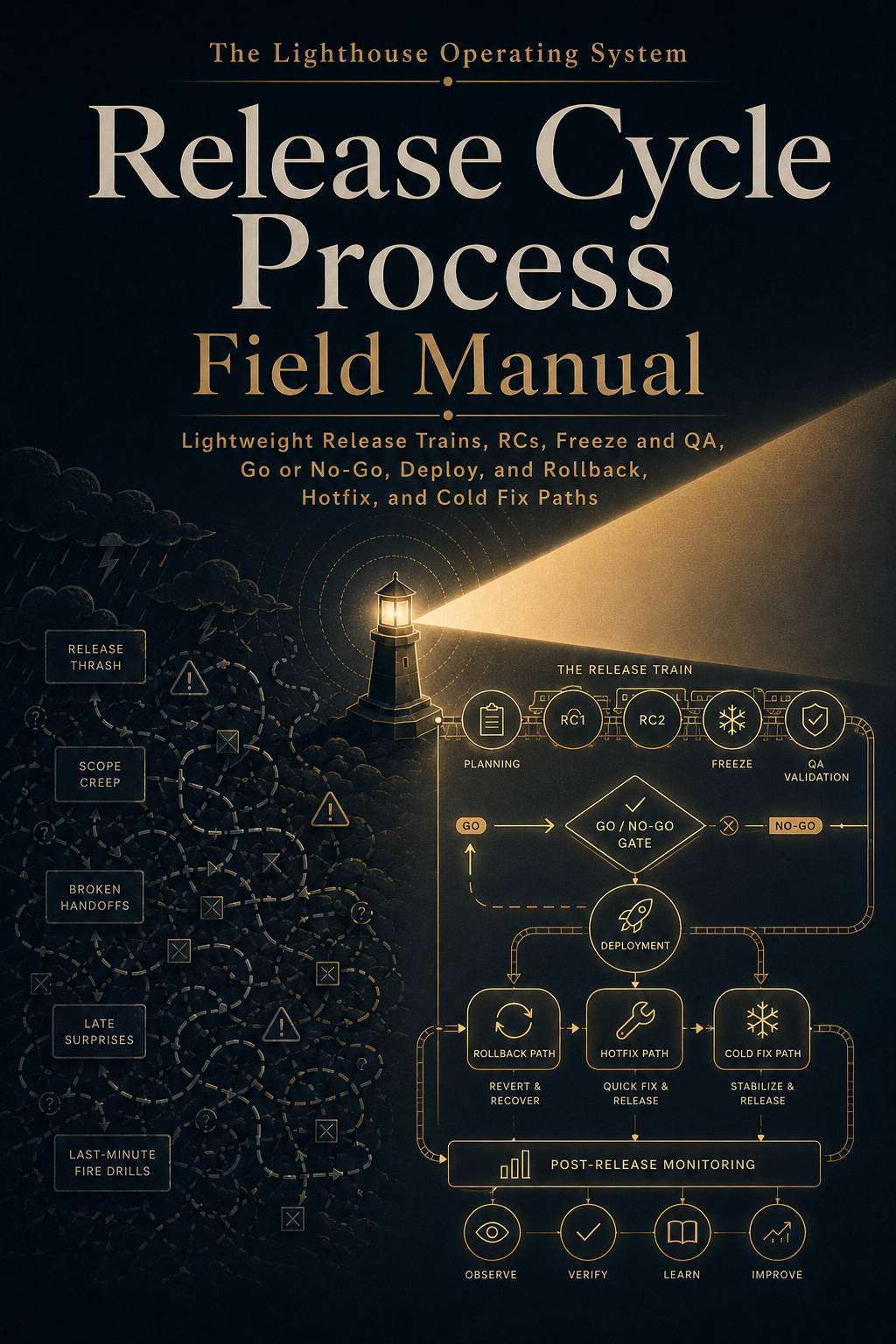
Lightweight release train practices, release candidates, freeze/QA, go/no-go, deployment, rollback, hotfix and cold-fix paths, and safer release coordination.
Why this title exists
This manual turns release coordination into a durable operating path. It replaces tribal memory, last-minute heroics, unclear go/no-go criteria, and improvised rollback plans with a lighter, more predictable release train model.
Included in the Complete Field Manual Pack
Individual Field Manuals are planned for later release and are not sold separately during preorder.
Preorder the BundleCoverage
What it covers
- Release candidates, freeze windows, QA checkpoints, validation expectations, and deployment readiness.
- Go/no-go discipline plus rollback, hotfix, and cold-fix routing.
- Release observability and post-release learning so every release improves the next one.
- The handoffs and readiness signals that make change safer, more visible, and easier to repeat.
Capture
What readers will learn
- How to structure release candidates and define freeze and QA expectations.
- How to run go/no-go decisions and coordinate deployments.
- How to distinguish rollback, hotfix, and cold-fix paths without confusion.
- How to reduce manual release coordination and improve release observability.
Audience
Best for
- Engineering managers, release managers, platform teams, and QA leads.
- Staff engineers, SRE teams, and product engineering groups that need more predictable delivery.
- Teams suffering from release thrash, broken handoffs, late surprises, or last-minute fire drills.
Outcomes
What it helps teams change
- More predictable, boring, and recoverable releases.
- Less release-day magic and fewer hero-dependent deploys.
- Clearer recovery paths when change does go wrong.